Transform Your Space with RGB Touch Lamps
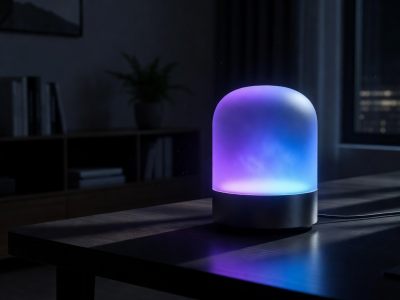
Lighting is no longer just about visibility; it's about atmosphere. While traditional warm or cool white lamps serve functional purposes, RGB (Red, Green, Blue) color-changing touch lamps allow you to completely alter the mood of a room with a single tap. By mixing these three primary colors of light, these lamps can produce millions of distinct hues.
The Mechanics of Touch Color Control
Controlling a wide spectrum of colors requires an intuitive interface. Manufacturers implement RGB touch controls in a few distinct ways:
- Cycle Tapping: The most basic interface. Tapping the base cycles through a pre-set list of colors (e.g., Red, Green, Blue, Yellow, Cyan, Magenta, White). This is simple but limits your exact color choice.
- Touch Color Rings: A capacitive spectrum ring on the top or base of the lamp. You simply drag your finger around the circular rainbow to instantly select the exact hue you want.
- Long-Press Gradients: A continuous color loop is activated by a long press. The lamp slowly transitions through the spectrum, and you lift your finger to "lock in" the current color.
Psychology of Colored Lighting
Choosing the right color isn't just an aesthetic choice; different wavelengths of light can significantly impact mood and biology.
| Color Range | Psychological Effect | Best Time/Place to Use |
|---|---|---|
| Reds & Ambers | Calming, mimics firelight, does not suppress melatonin | Bedrooms, winding down before sleep, late-night reading |
| Blues & Cyans | Energizing, promotes alertness, suppresses melatonin | Home offices, morning routines, gaming setups |
| Greens | Restful, balances the eyes, reduces glare fatigue | Reading nooks, background ambient lighting for TV watching |
| Purples & Pinks | Creative, atmospheric, whimsical | Parties, creative studios, children's play areas |
RGB vs. RGBW Technology
If you plan to use an RGB touch lamp for general reading as well as mood lighting, pay close attention to whether the lamp uses standard RGB or RGBW (Red, Green, Blue, White) LEDs.
A standard RGB lamp creates white light by firing all three color LEDs at full brightness. The result is often a slightly blue or purple-tinted "cool" white that is harsh and unpleasant for reading. An RGBW lamp includes dedicated white LED diodes (often tunable between warm 2700K and cool 6000K). This ensures that when you switch the lamp from "party mode" back to "reading mode," you get high-quality, high-CRI (Color Rendering Index) white light.
Dynamic Modes
Many RGB touch lamps also feature dynamic modes, such as a breathing effect (slowly pulsing in brightness), a spectrum cycle (smoothly transitioning through all colors), or even audio-sync modes where an internal microphone pulses the light to the beat of music in the room. These features make them exceptional accent pieces for living rooms and entertainment centers.