Understanding Dimmable Touch Lamps
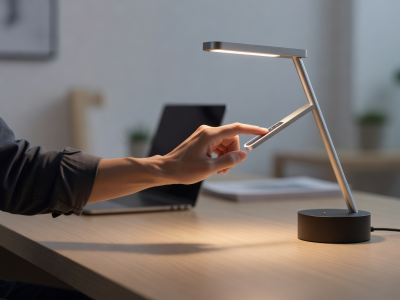
Lighting is rarely a one-size-fits-all scenario. The bright, focused light required for reading documents at a desk is entirely inappropriate for unwinding in the living room with a glass of wine. Dimmable touch lamps solve this problem elegantly, combining the ease of touch operation with the versatility of adjustable brightness.
3-Way Stepped Dimming vs. Continuous Dimming
When shopping for a dimmable touch lamp, you will encounter two primary control methods. Understanding the difference is crucial for selecting the right model for your specific needs.
3-Way Stepped Dimming
This is the classic touch lamp functionality. The lamp typically has three brightness states: Low, Medium, and High (followed by Off).
- First tap: Low brightness (around 10-20% capacity), ideal for ambient night-lighting.
- Second tap: Medium brightness (around 50% capacity), suitable for casual screen viewing or dining.
- Third tap: High brightness (100% capacity), providing task lighting for reading or detailed work.
- Fourth tap: Turns the lamp off.
The primary advantage of 3-way dimming is speed and predictability. You always know exactly how many taps it takes to reach your desired light level.
Continuous (Stepless) Dimming
Modern advancements in LED drivers have introduced stepless dimming to touch lamps. Instead of distinct jumps in brightness, you can fine-tune the light level smoothly.
This is usually achieved in one of two ways. The first is a "long press"—tapping once turns the lamp on, while holding your finger against the sensor causes the brightness to slowly ramp up or down. The second method uses a capacitive touch slider on the base, allowing you to drag your finger to physically set the light level.
Best Use Cases for Dimmable Touch Lamps
| Location | Ideal Dimming Type | Reasoning |
|---|---|---|
| Home Office Desk | Continuous Slider | Allows precise adjustments based on monitor brightness and changing daylight to reduce eye strain. |
| Living Room Side Table | 3-Way Stepped | Quick toggling between reading light and movie-watching ambient light without fuss. |
| Nursery / Children's Room | Continuous (Long Press) | Allows parents to incrementally raise the light just enough to check on a sleeping child without waking them. |
Technical Considerations: Flickering and LED Drivers
The quality of a dimmable touch lamp heavily relies on its internal LED driver. Poorly designed dimming circuits use low-frequency Pulse Width Modulation (PWM) to dim the light. This means the light is actually turning on and off very rapidly. While it might look dim to the naked eye, it can cause subconscious eye strain and headaches, and will show up as severe banding if you try to take a video or photo near the lamp.
High-quality touch lamps use high-frequency PWM or constant current reduction to achieve dimming. When evaluating a lamp, look for specifications that mention "flicker-free" or "eye-caring" LEDs, which indicate a superior driver board designed to maintain light stability at even the lowest brightness settings.